OPC 40001 UA for Machinery

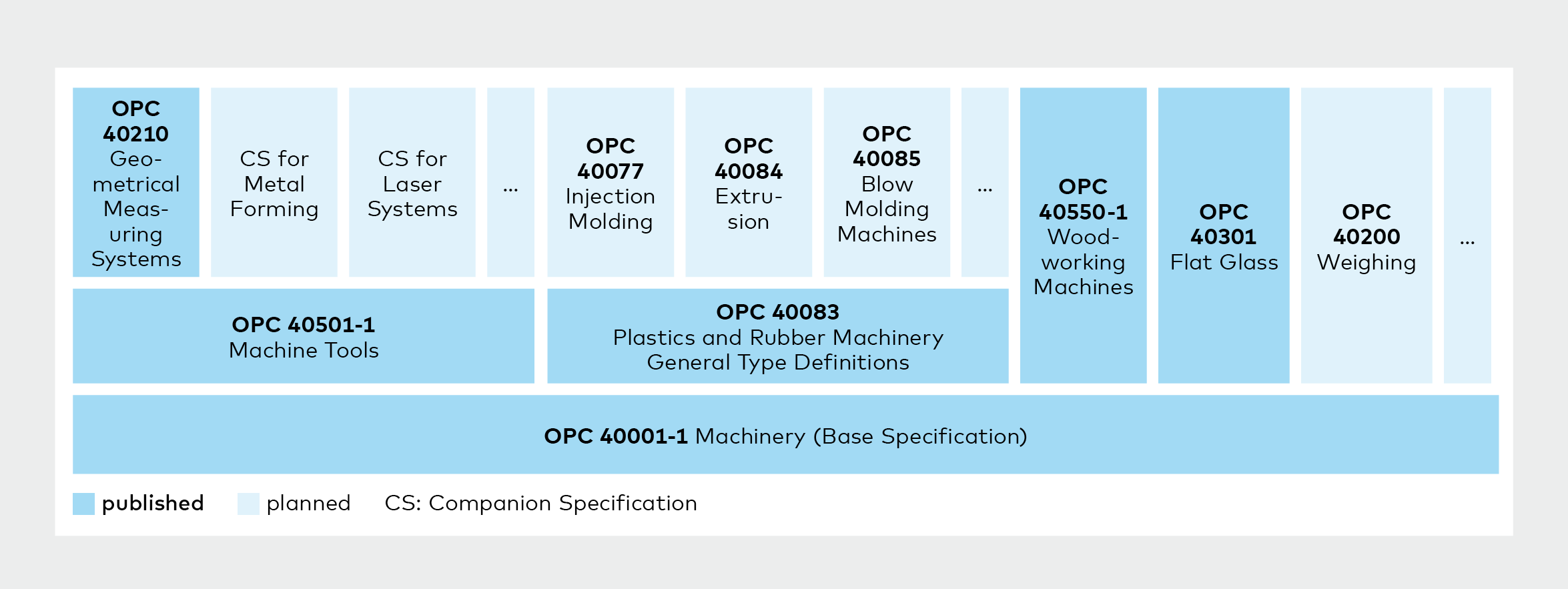
The OPC 40001 series is applicable for the entire machine building industry.

It con­tains vari­ous build­ing blocks for machinery that allow use cases across dif­fer­ent types of machines and machine com­pon­ents. These build­ing blocks can either be used in oth­er Com­pan­ion Spe­cific­a­tions or dir­ectly in an inform­a­tion model.

The first ver­sion was pub­lished in 09/2020 and was one of the first OPC UA Com­pan­ion Spe­cific­a­tions to be fully endorsed by the umati com­munity. Recently, the ver­sion was updated to address addi­tion­al use cases and will con­tin­ue to be updated in the future.

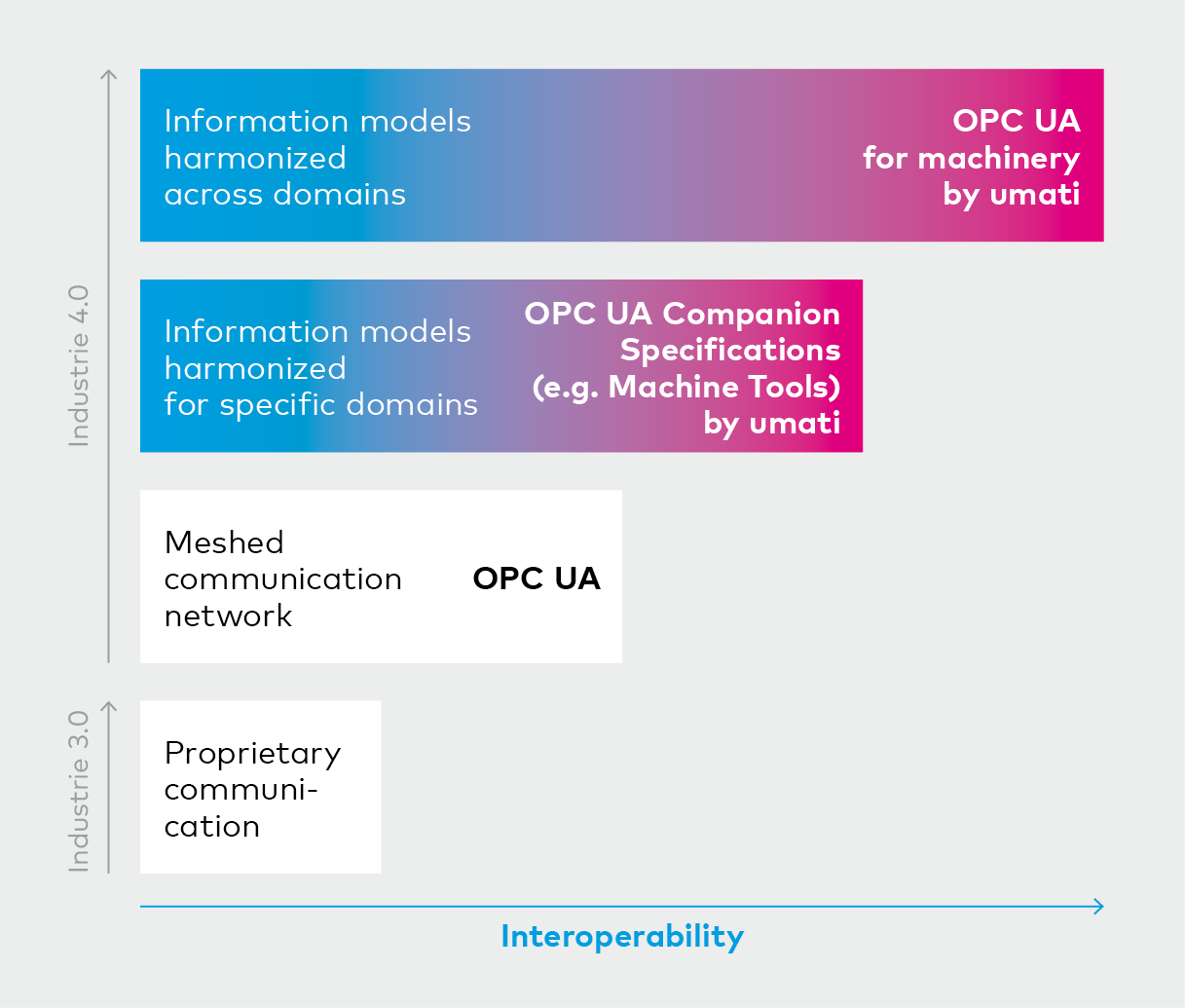
The highest level of inter­op­er­ab­il­ity is achieved through cross-domain inform­a­tion mod­els. One such inform­a­tion mod­el is the OPC UA Com­pan­ion Spe­cific­a­tion OPC UA for Machinery.

Build­ing blocks covered:

Machine Iden­ti­fic­a­tion and Nameplate 
Find­ing all Machines in a Serv­er (OPC 40001-1) 
Com­pon­ent Iden­ti­fic­a­tion and Nameplate
(OPC 40001-1) 
Find­ing all Com­pon­ents of a Machine (OPC 40001-1) 
Machinery State (OPC 40001-1) 
Coun­ters (OPC 40001-1) 
Pro­cess Val­ues (OPC 40001-2) 
Job Man­age­ment (OPC 40001-3) 
Res­ult Trans­fer (OPC 40001-101) 
Energy Man­age­ment (OPC 40001-4) 

Iden­ti­fic­a­tion
Machine and com­pon­ent iden­ti­fic­a­tion is the found­a­tion of the plug and work concept. Assets from a wide range of indus­tries can be iden­ti­fied in the same way, enabling recog­ni­tion between dif­fer­ent par­ti­cipants, regard­less of the machine and manufacturer.

Har­mon­ized Inter­faces based on OPC UA for Machinery

Machinery State
The Machinery State mod­ule paves the way for vari­ous use cases like Machine Mon­it­or­ing and KPI Cal­cu­la­tions. Machine avail­ab­il­ity can eas­ily be determ­ined, res­ult­ing in high added value – espe­cially in pro­duc­tion pro­cesses where machines from dif­fer­ent indus­tries are used.

The defin­i­tion of states enables the basic status of the machine to be expressed in a uni­form way across all the dif­fer­ent domains in mech­an­ic­al pro­cess engin­eer­ing. Examples of those states are: cur­rently execut­ing an activ­ity, wait­ing to start or resume an activ­ity, or out of service.

Job Man­age­ment
The Job Man­age­ment inform­a­tion mod­el defined in OPC UA for Machinery builds on the ISA 95 Job Con­trol spe­cific­a­tion. In addi­tion, all job para­met­ers are aligned with the ter­min­o­logy from ISO 22400. Thus, it is a highly har­mon­ized inform­a­tion mod­el with a wide range of usable job para­met­ers. These include the job name, a start time, an end time, a job res­ult, and inform­a­tion about the cur­rent status of the job. With the help of the Job Man­age­ment mod­el, use cases such as trace­ab­il­ity and qual­ity assur­ance can be sup­por­ted in addi­tion to the obvi­ous use cases such as mon­it­or­ing and con­trolling of jobs.

Energy Man­age­ment
Energy man­age­ment in indus­tri­al envir­on­ments is increas­ingly crit­ic­al for optim­iz­ing oper­a­tions and meet­ing sus­tain­ab­il­ity goals. The OPC UA for Machinery Energy Man­age­ment is based on the gen­er­ic spe­cific­a­tion OPC 34100 – Energy Con­sump­tion Man­age­ment, a col­lab­or­at­ive devel­op­ment by ODVA, OPC Found­a­tion, PI, and VDMA.
The OPC UA for Machinery Energy Man­age­ment provides a stand­ard­ized approach to access­ing energy con­sump­tion data from machines and their com­pon­ents. By defin­ing a con­sist­ent set of typ­ic­al, mar­ket-rel­ev­ant energy inform­a­tion, it enables seam­less integ­ra­tion across diverse sys­tems and vendors. The struc­tured energy data made avail­able through this spe­cific­a­tion sup­ports a wide range of use cases. These include Load Man­age­ment, Product Car­bon Foot­print and Pre­dict­ive Main­ten­ance – all of which bene­fit from trans­par­ent and inter­op­er­able energy met­rics dir­ectly from the machine level.

OPC UA for Machinery can be used across the entire land­scape of pro­duc­tion or in com­bin­a­tion with domain-spe­cif­ic specifications.

The Job Man­age­ment mod­el enables a user to issue job orders from a high­er-level sys­tem to a machine. The user can also update and man­age the job oders and get inform­a­tion on them dur­ing and after their execution.

Driv­en by the industry
OPC 40001 was developed under the umbrella of VDMA, the Mech­an­ic­al Engin­eer­ing Industry Asso­ci­ation, in a Joint Work­ing Group with the OPC Found­a­tion. It fol­lowed an ini­ti­at­ive by a num­ber of technology-specific
first-mover stand­ard­iz­a­tion groups from dif­fer­ent sec­tors of the machine build­ing indus­tries. All domain-spe­cif­ic work­ing groups sup­port OPC UA for Machinery as the basis for interoperability.

Con­tact:
Mr. Heiko Her­den, Joint Work­ing Group Chairman
VDMA – Mech­an­ic­al Engin­eer­ing Industry Association

The spe­cific­a­tion is avail­able for free at the fol­low­ing repos­it­ory: umati.org/ua4m